 Wishlist
Short answer: size to your daily watt-hours — then add battery and inverter margins
You need enough solar to reliably replace the system’s average daily energy use (in watt‑hours), plus battery capacity to store usable energy for cloudy days, and an inverter sized to run your largest simultaneous loads. For most simple off‑grid households that means: calculate daily watt‑hours, multiply by 1.3–2.0 for losses and autonomy, choose batteries with that usable capacity, and size panels to supply the adjusted daily demand based on local peak sun hours.
How to calculate the core number: daily watt‑hours
Start with an energy audit. List every appliance, its watt rating, and the hours used per day. Multiply watts × hours to get watt‑hours (Wh). Sum those to get your average daily consumption.
- Example: LED lighting 5 × 6W × 4h = 120 Wh; refrigerator 150W × 8h effective run = 1,200 Wh; laptop 60W × 4h = 240 Wh. Sum = ~1,560 Wh/day.
Use measured values when possible (plug-in power meters, inverter logs). If you can’t measure, use appliance nameplate watts as a starting point and be conservative.
Account for losses, inefficiencies and days without sun
Solar systems have losses: charge-controller inefficiency, inverter conversion, wiring, and battery charge/discharge inefficiency. Apply a 1.3–1.5 multiplier for system losses if you plan to recharge daily. If you want 2–3 days of autonomy (recommended in many remote locations), multiply daily Wh by the number of days, then still apply losses.
- Daily-only example: 1,560 Wh × 1.4 = 2,184 Wh/day required from solar.
- With two-day autonomy: 1,560 Wh × 2 × 1.4 = 4,368 Wh of usable battery capacity needed.
Convert usable battery capacity to battery bank size
Decide the battery chemistry and allowable depth of discharge (DoD). Lead‑acid is typically limited to 50% DoD; lithium batteries often allow 80–90% usable. Calculate total battery capacity (in Wh or Ah) using system voltage.
- Example (12V lead‑acid): Need 4,368 Wh usable → 4,368 Wh ÷ 0.5 DoD = 8,736 Wh total → 8,736 Wh ÷ 12V ≈ 728 Ah battery bank.
- Same usable with 12V lithium at 85% DoD: 4,368 ÷ 0.85 ≈ 5,141 Wh → ≈ 429 Ah at 12V.
Round up based on available battery sizes and remember to leave room for aging—batteries lose capacity over time.
Size the solar array using peak sun hours
Find your site’s average peak sun hours (PSH) for the worst months you expect to operate. Divide the required daily Wh-from-solar by PSH to get required panel wattage, then increase by 10–25% to cover system losses and future load growth.
- Using the earlier daily solar need of 2,184 Wh and a conservative 4 PSH: 2,184 Wh ÷ 4 h = 546 W of panels. Add 25% margin → ~680 W of panels.
Panels are rated DC, so this number is the sum of panel watt ratings. Tilt, shading and temperature will affect real output; use the worst-case PSH for winter sizing.
Choose an inverter that matches peak simultaneous loads
Inverter sizing is about power (watts) and not energy. List devices that may run at the same time and sum their start and run watts. Refrigerators, pumps and well motors have large startup surges; pick an inverter with enough surge capacity or use soft‑start devices.
- Example: fridge (start 900W, run 150W) + microwave 1,000W + laptop 100W → choose inverter that can handle combined surge (often 2–3× continuous) and continuous load (~1,250W).
Include slight headroom (10–25%) and match inverter voltage to battery bank voltage for efficiency.
Trade-offs and common system sizes
There’s no single “right” size—choices come down to lifestyle, budget and site. Typical tiers people use:
- Minimal (basic lights, phone charging, small fridge): 300–800 Wh/day → 200–600W panels, 200–400 Ah battery (12V lithium or larger lead‑acid bank).
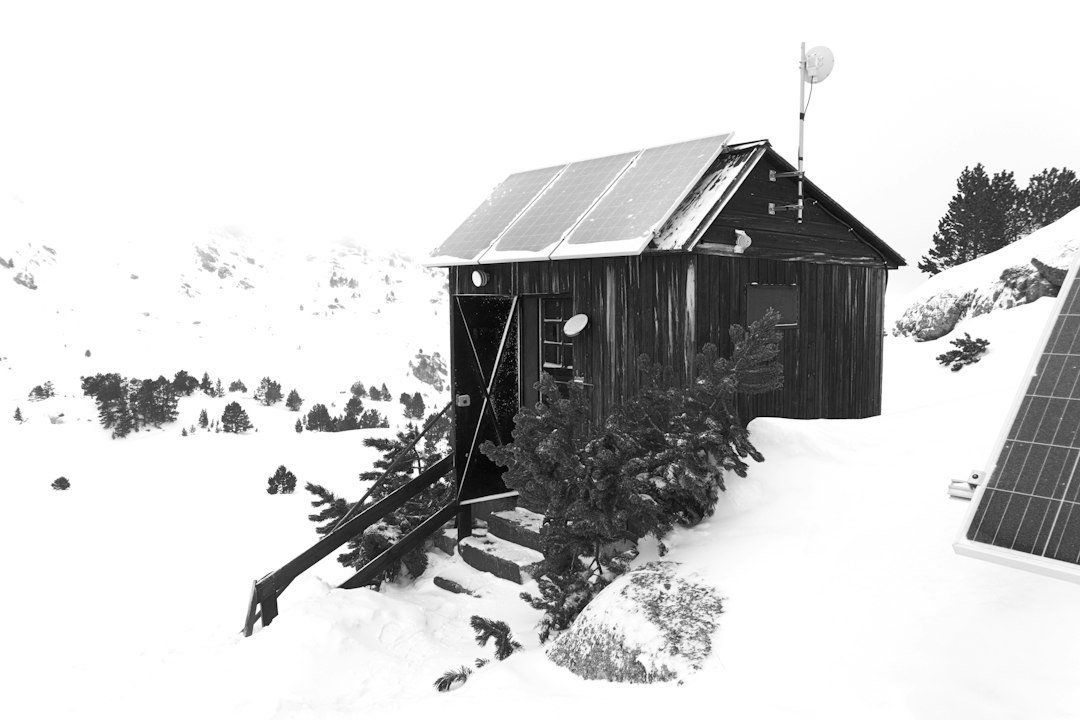
- Small cabin (fridge, LED lights, occasional microwave, laptop): 1,500–3,000 Wh/day → 600–1,200W panels, 400–800 Ah battery depending on voltage/chemistry.
- Full household off‑grid (electric cooking, continuous water pump, multiple appliances): 5,000+ Wh/day → multiple kW of panels and large battery banks (kWh range), with careful system design.
Smaller systems are cheaper but require strict conservation. Larger systems increase freedom but cost more up front and need more maintenance and space for panels and batteries.
When exceptions matter
If you plan heavy seasonal loads (electric heating, crop drying) size for the peak season or provide alternative heating/fuel. For mobile or tiny setups prioritize portable panels and a higher‑cycle battery. In cold climates, battery performance and PSH decline—plan conservatively or include a backup generator.
Practical product to consider for small off‑grid setups
If you’re building a starter system or want modular expansion, a mid‑power bifacial or portable panel option makes installation flexible and efficient. For a compact but expandable array, consider a high‑output bifacial panel pair that fits rooftop or ground mounts and pairs easily with common charge controllers.
Next steps and priorities
Do a measured weeklong audit, pick target autonomy (days off‑sun), choose battery chemistry, and then size panels using worst‑month PSH. If uncertain, oversize battery first—storage gives you more operational flexibility than marginally more panels.
- Complete a measured daily watt‑hour audit for at least one week.
- Decide acceptable days of autonomy and battery chemistry (lead‑acid vs lithium).
- Calculate inverter continuous and surge requirements from simultaneous loads.
- Lookup average worst‑month peak sun hours for your exact site.
- Size panels to meet adjusted daily Wh divided by PSH, then add margin.
- Plan space, mounting, and cooling for panels and battery enclosure safety.
Sizing off‑grid solar centers on daily energy needs: calculate watt‑hours used, choose battery capacity for desired autonomy, and size panels by local peak sun hours with margins for losses. Start conservative with batteries if you must prioritize one.
How many solar panels does a typical tiny cabin need?
Many tiny cabins run on 400–1,000W of panels (2–6 typical 200W panels) depending on lights, fridge use and heating; pair with a 200–600Ah battery bank for useful autonomy.
Can I rely on batteries alone during several cloudy days?
Only if you size battery capacity for multiple days of autonomy and reduce loads; otherwise include a generator backup or alternative energy (wind, propane) for extended cloudy stretches.
Should I pick lithium or lead‑acid batteries?
Lithium gives more usable capacity per kWh, longer cycle life, and smaller size but costs more up front; lead‑acid is cheaper initially but needs larger banks and more maintenance.
Do I need a professional designer?
For simple systems you can size and install yourself with careful planning; for multi‑kW, grid‑tie hybrids, or systems powering large motors, a professional ensures safety, correct wiring and code compliance.